
Alaska's Oil Production, Storage, and Transportation Infrastructure
- Crude Oil Infrastructure
- Noncrude Oil Infrastructure
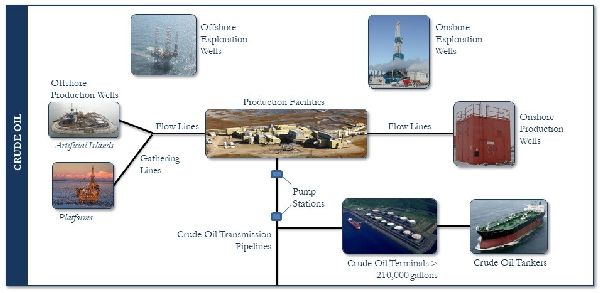
- Exploration Facility
- A platform, vessel, or other facility used to explore for hydrocarbons in or on the waters of the state or in or on land in the state; the term does not include platforms or vessels used for stratigraphic drilling or other operations that are not authorized or intended to drill to a producing formation. For more information, see Alaska Statute AS 46.04.900 (8)
- Oil Barge
- A vessel which is not self-propelled and which is constructed or converted to carry oil as cargo in bulk. For more information, see Alaska Statute AS 46.04.900 (14)
- Oil Terminal Facility
- An onshore or offshore facility of any kind, and related appurtenances, including but not limited to a deepwater port, bulk storage facility, or marina, located in, on, or under the surface of the land or waters of the state, including tide and submerged land, that is used for the purpose of transferring, processing, refining, or storing oil. For more information, see Alaska Statute AS 46.04.900 (15)
- Pipeline
- The facilities, including piping, compressors, pump stations, and storage tanks, used to transport crude oil and associated hydrocarbons between production facilities or from one or more production facilities to marine vessels. For more information, see Alaska Statute AS 46.04.900 (19)
- Production Facility
- A drilling rig, drill site, flow station, gathering center, pump station, storage tank, well, and related appurtenances on other facilities to produce, gather, clean, dehydrate, condition, or store crude oil and associated hydrocarbons in or on the water of the state or on land in the state, and gathering and flow lines used to transport crude oil and associated hydrocarbons to the inlet of a pipeline system for delivery to a marine facility, refinery, or other production facility. For more information, see Alaska Statute AS 46.04.900 (20)
- Tank Vessel
- A self-propelled waterborne vessel that is constructed or converted to carry liquid bulk cargo in tanks and includes tankers, tankships, and combination carriers when carrying oil; the term does not include vessels carrying oil in drums, barrels, or other packages, or vessels carrying oil as fuel or stores for that vessel. For more information, see Alaska Statute AS 46.04.900 (26)
Several crude and noncrude oil infrastructure operations are required to have an Oil Discharge Prevention and Contingency Plan and approved proof of Financial Responsibility. For more information on these requirements and to find out which operations they are required for, please see the following links:

- Class 2 Facility
- A facility with less than 420,000 gallons total storage capacity for petroleum. For more information, see the Class 2 facilities home page, and Alaska Statute AS 18 AAC 75.849 (1)
- Home Heating Oil Tanks
- Above and below ground storage tanks used to store fuel for residential heating. For more information, see the Home heating oil tank homepage
- Nontank Vessel
- A self-propelled vessel, which may include commercial fishing vessels, commercial fish processor vessels, passenger vessels, and cargo vessels, but does not include tank vessels and oil barges. For more information, see Alaska Statute AS 46.04.900 (12), and the following Nontank Vessel Presentation
- Oil Terminal Facility
- An onshore or offshore facility of any kind, and related appurtenances, including but not limited to a deepwater port, bulk storage facility, or marina, located in, on, or under the surface of the land or waters of the state, including tide and submerged land, that is used for the purpose of transferring, processing, refining, or storing oil. For more information, see Alaska Statute AS 46.04.900 (15)
- Railroad Tank Cars
- Rolling stock used to transport oil or petroleum products in bulk as cargo. For more information, see Alaska Statute AS 46.04.900 (22)
- Underground Storage Tanks
- One or a combination of stationary devices, including underground pipes connected to the devices, that is designed to contain an accumulation of petroleum, the volume of which, including the volume of underground pipes, is 10 percent or more beneath the surface of the ground. For more information, see the Underground storage tank home page, and Alaska Statute AS 46.03.450 (8)
Several crude and noncrude oil infrastructure operations are required to have an Oil Discharge Prevention and Contingency Plan and approved proof of Financial Responsibility. For more information on these requirements and to find out which operations they are required for, please see the following links:
 Indicates an external site.